(1835-1907)
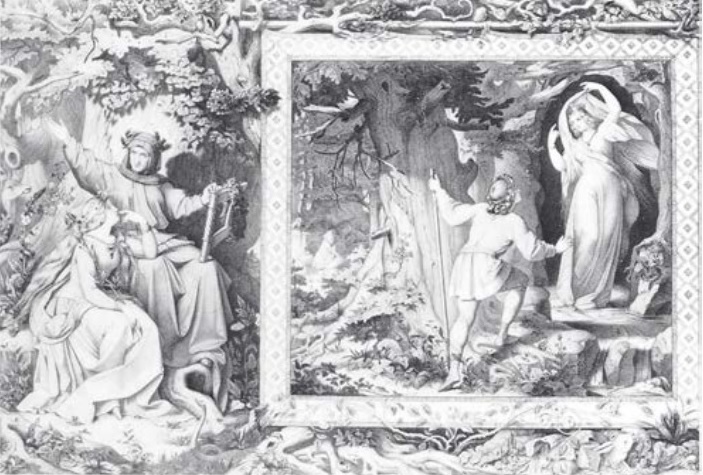
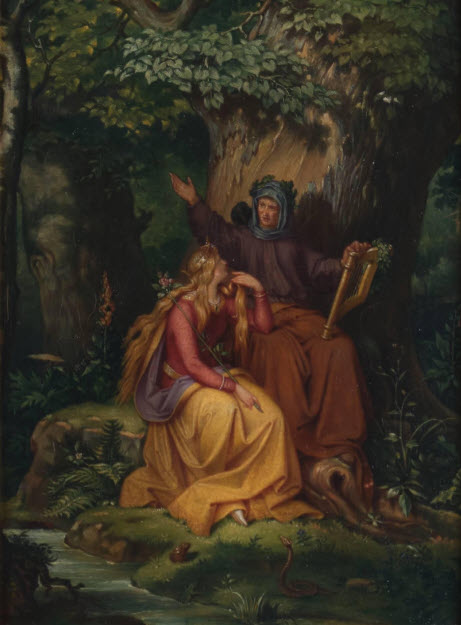
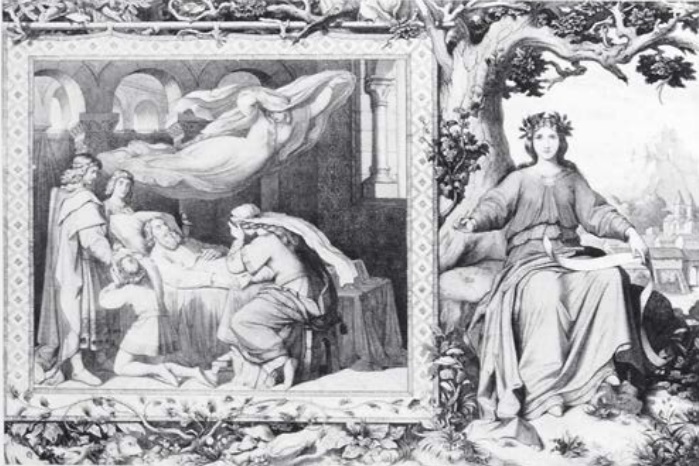
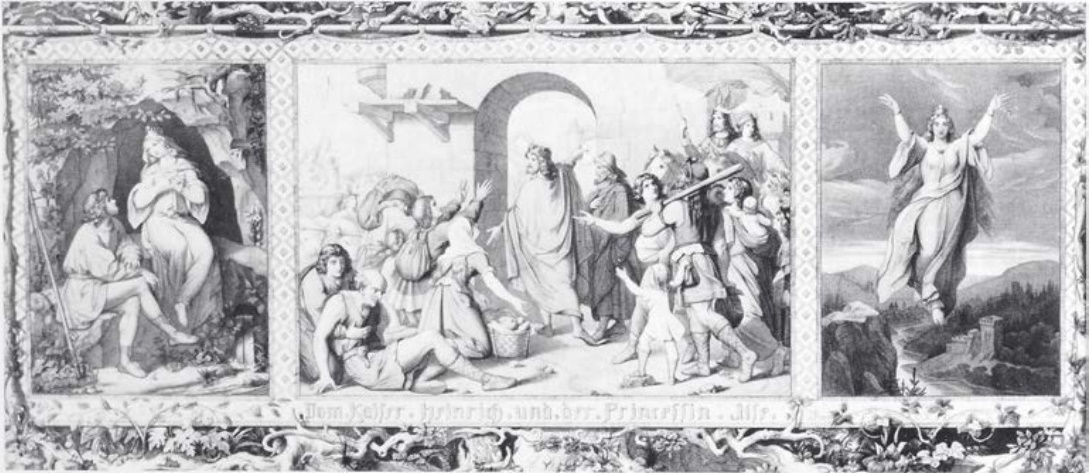
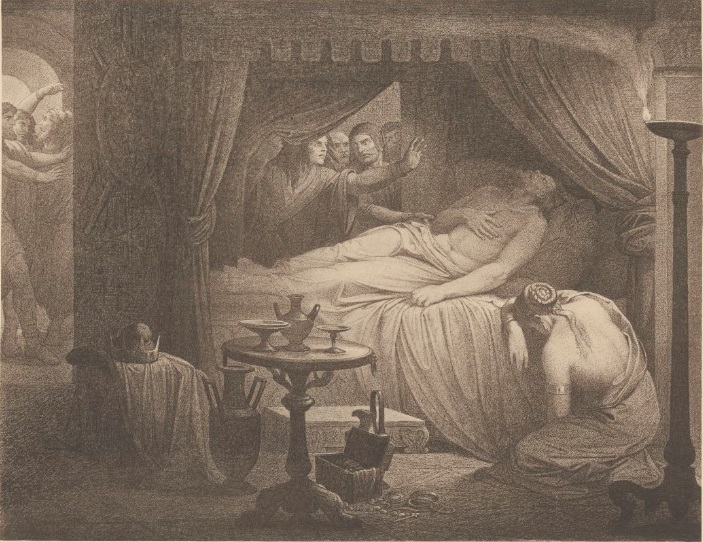
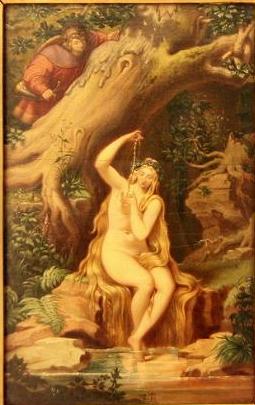
The Legend of Kaiser Heinrich I and the Princess Ilse (1867)
&
THE LOST MASTERPIECE:
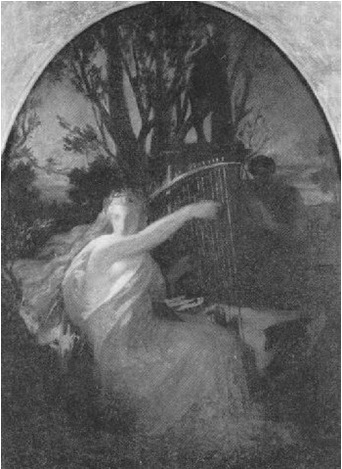
Helgi and Sigrun (1879)
&
Julius Naue, Archaeologist and History Painter (1894)
See Also:
1868 Julius Naue
Germanic Hero-Kings of the Migration Period
Germanischen Heldenkönige der Völkerwanderung
at Villa Lingg, Bodensee
1874-1877 Julius Naue
The Fate of the Gods from the German Heroic Saga
Das Schicksal der Götter nach der Deutschen Heldensage
at Die Haus Hauhopen, Hamburg-Altona on the Elbe
The Private Residence of Arnold Otto Meyer & Family
[GERMANIC MYTHOLOGY][CLASSIC ILLUSTRATIONS]
 |
 |
 |
|||||||||||||||||||||||||||||||||||||||||||
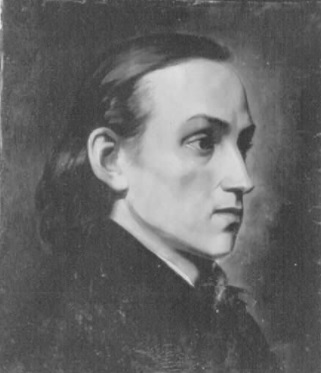
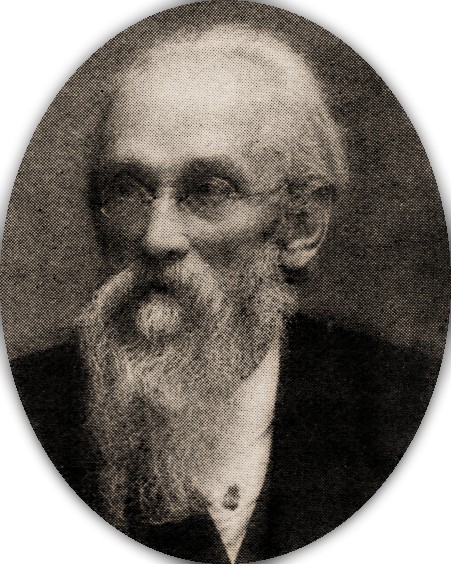
| Julius Naue by Jakob Wild Strum, 1856 | |||||||||||||||||||||||||||||||||||||||||||||
|
A PORTRAIT OF THE ARTIST |
|||||||||||||||||||||||||||||||||||||||||||||
|
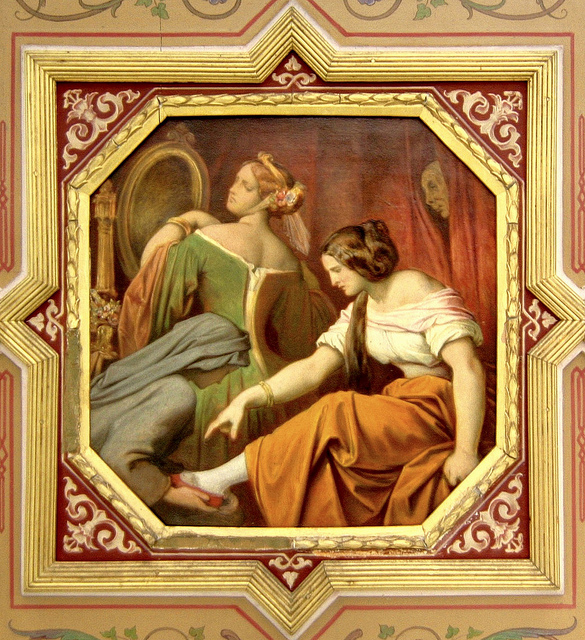
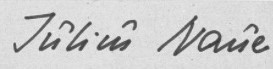
Born June 17, 1835 (died 1907) as Julius Erdmann August Naue in Köthen, Julius Naue was a German painter, illustrator and archaeologist primarily known for his illustrations of archaeological subjects and historic Germanic costumes. He also executed at least three murals based on Nordic myth and legend in private homes. At present, these works appear to be lost leaving few traces in the public record, other than detailed descriptions of those works in Paul Hermanowski's Die Deutsche Götterlehre und ihre Verwertung in Kunst und Dichtung, Volumes 1-2 "The German Mythology and its Use in Art and Poetry" (1874). Due to unfortunate circumstances, he was unable to devote himself to art until late. His curriculum vitae shows that Naue left the high school in his hometown Köthen at the request of his parents without a degree. He completed an apprenticeship as a bookseller in Köthen, then in Nuremberg with August von Kreling, and later in Munich with Moritz von Schwind for artistic training. As a student of von Kreling, Naue mainly studied nature and Albrecht Dürer whose great passion he later reproduced as woodcuts. He moved to Munich, where Moritz von Schwind accepted him among his students. Naue came to work for von Schwind in Munich where he remained until 1866. His first picture under the direction of his new master was an Annunciation of the Virgin, which received general recognition at the exhibition of the Historical Art Association in Prague in 1862. With his picture "The Nordic Saga" (watercolor, 1864) , he entered the realm of Romanticism. This was followed by his The Toad Ring in 1865. In recent times, he composed 8 cartons for frescoes for the Villa Lingg —figures from Lingg's epic depicting the Great Migration in the spirit of the poem. After his master's death in the late 1860s, Naue executed a third variant of Schwind’s Cinderella cycle, presenting his audience with six monumental paintings retelling the gripping story of Cinderella, her brave suffering and glorious redemption. He co-authored a biography of von Schwind and also made etchings and drawings for woodcuts after Moritz von Schwind, painted cycles of epic murals in private residences based on Greek and Germanic mythology, as well as embarked on archeaological endeveavors. Naue devoted himself to more detailed studies, partially ancient, especially Greek, numismatics partially the pre-Roman antiquities of Bavaria; his work in these fields was the basis upon which he applied for a doctorate of philosophy at the University of Tübingen in 1887. [Source: Mark Schmidt, Alte Akten – Neue Gräber? Marginalien zu Julius Naue und Johannes Dorn, 2006.]
In 1868, the wealthy merchant Heinrich Lingg, the brother of the German poet Hermann Lingg [pictured], had returned from America and bought a plot of land in a beautiful bay on Lake Constance near Lindau and built a villa on it. When the building was finished, he privately commissioned Julius Naue to adorn the principle chamber of Villa Lingg with eight monumental frescoes, each seven feet in height, illustrative of Lingg's popular poem, Die Völkerwanderung (The Migration of Peoples). 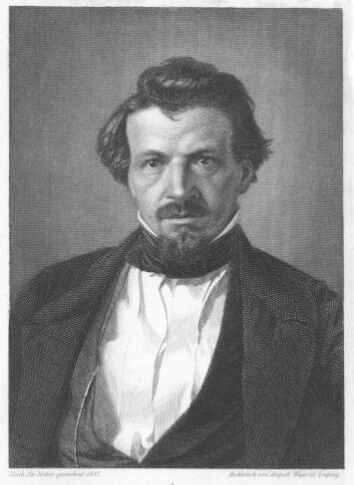 A trip to the old Italian city of Ravenna was planned for the
studies necessary for the paintings in the company of Hermann
and Heinrich Lingg. The city is particularly strange and
alluring for Germans. Here the Cheruscan Arminius son was
brought as a prisoner, kings of the Goths and Longobards ruled
here, and in Verona the heroic songs of the Migration Period
were heard at court. The stories of Alboin and Dietrich von Bern
reside there, because Bern was Verona. According to Hermann
Lingg's diary, they had a very comfortable stay, visiting old
Byzantine churches with their portraits of people, the districts
named after the Goth king, his tomb and the remains of his
palace. On the way home, they visited Florence, where they
admired the galleries, then returned to Germany without further
stay. Afterward, Naue remained in Lindau to apply the studies
made in Italy to his frescoes in Villa Ling.
A trip to the old Italian city of Ravenna was planned for the
studies necessary for the paintings in the company of Hermann
and Heinrich Lingg. The city is particularly strange and
alluring for Germans. Here the Cheruscan Arminius son was
brought as a prisoner, kings of the Goths and Longobards ruled
here, and in Verona the heroic songs of the Migration Period
were heard at court. The stories of Alboin and Dietrich von Bern
reside there, because Bern was Verona. According to Hermann
Lingg's diary, they had a very comfortable stay, visiting old
Byzantine churches with their portraits of people, the districts
named after the Goth king, his tomb and the remains of his
palace. On the way home, they visited Florence, where they
admired the galleries, then returned to Germany without further
stay. Afterward, Naue remained in Lindau to apply the studies
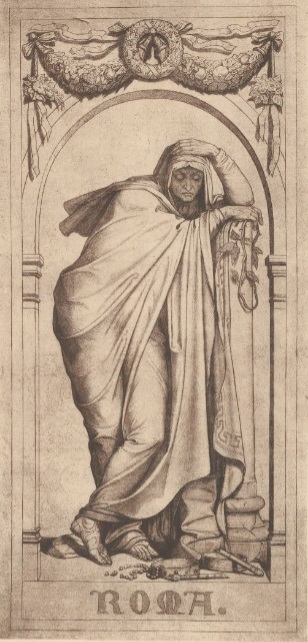
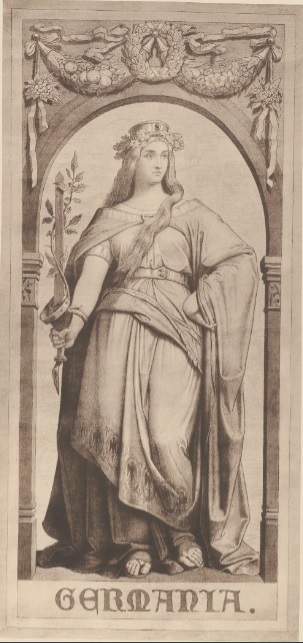
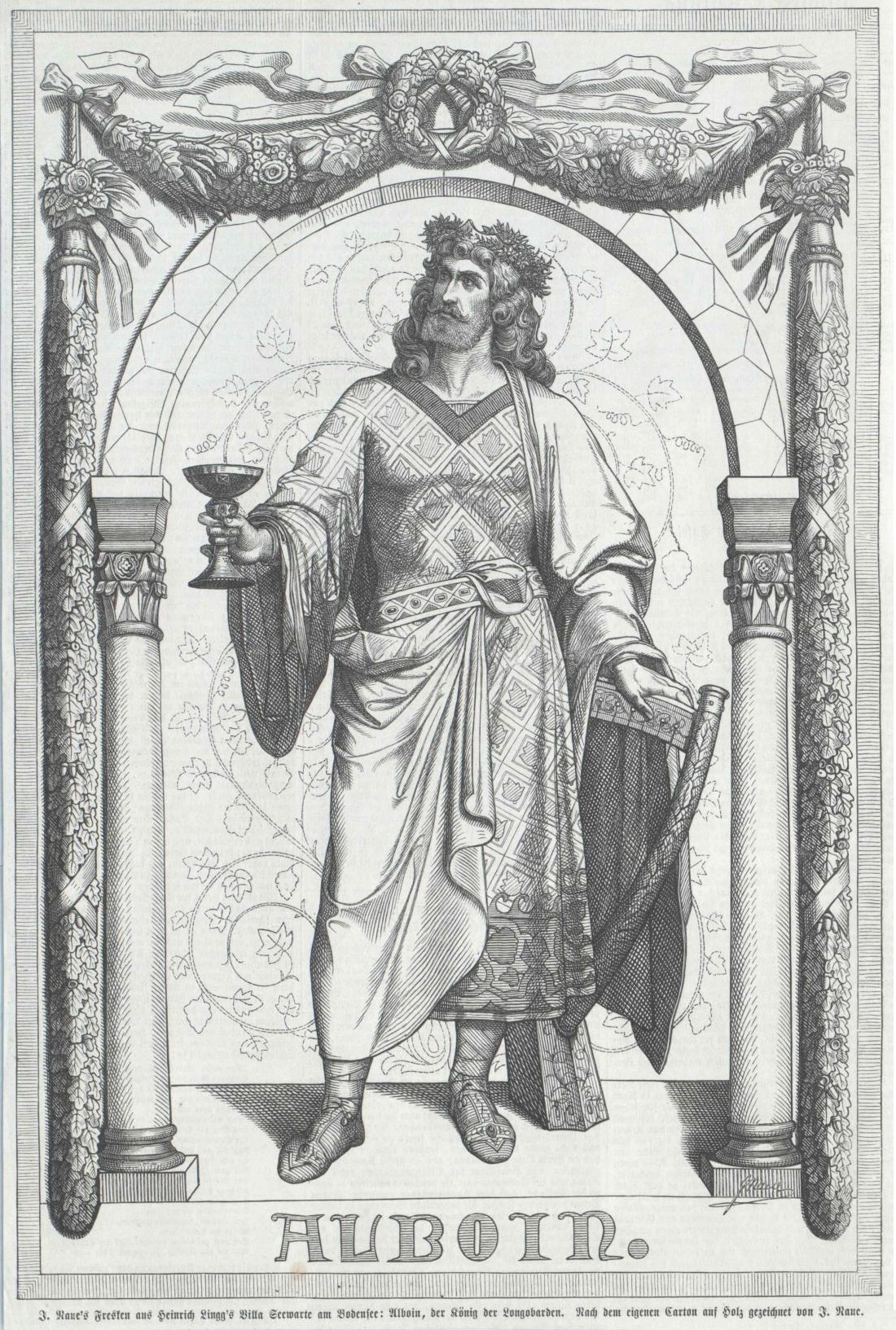
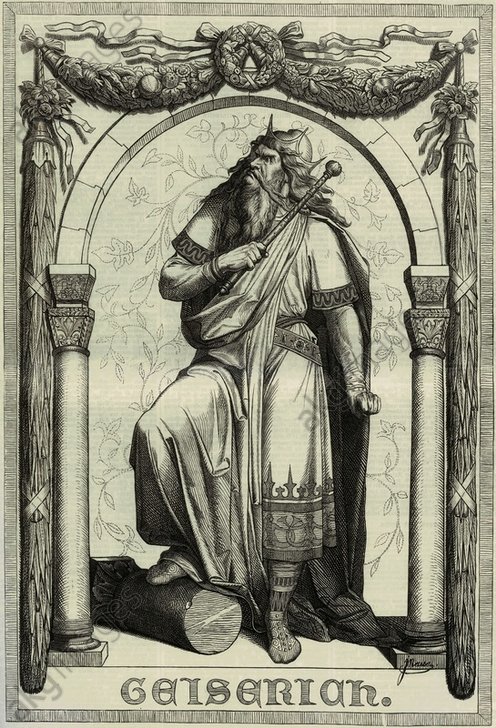
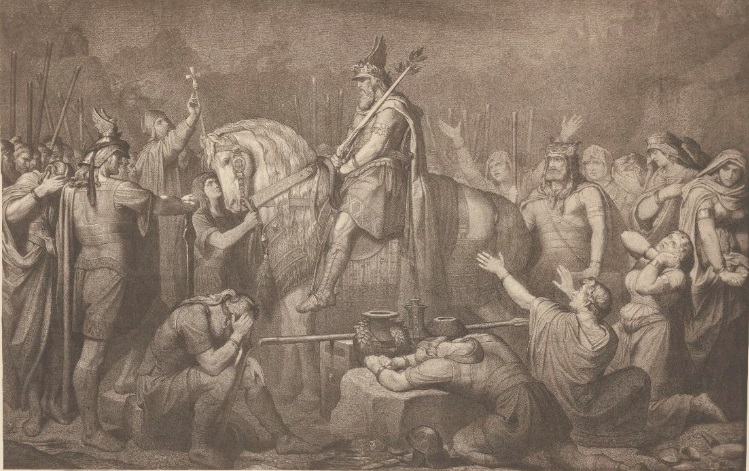
made in Italy to his frescoes in Villa Ling. That same year, painter Julius Naue exhibited eight cartoons at an art expo in Munich which were to be painted al fresco in the villa of the merchant Lingg in Lindau. The subject is composed of the most outstanding heroes from the Great Migration. The walls to the hall entrance will be decorated with figures representing Rome (Roma), Germania, and six great Germanic Hero-kings of the Migration period [Die 6 grössten germanischen Heldenkönige der Völkerwanderung], including Alaric at Rome, Odoacer surrendering Ravenna to Theodoric, the Frank Chlodwig, the Lombard Alboin, Geiserich the King of the Vandals, and other chief personages and events of that era. These figures with their characteristic emblems stand in round arches around which festoons wind, and show good characterization, Chlodwig and Albion are especially well executed. Ferdinand Gregorovius, a vistor to the home in late September of 1868 remarked, "Visited the villa of Lingg, a merchant and brother of the poet of Völkerwanderungen. He has some of the barbarian kings of the poem painted in fresco in his room beside the Germania and Roma of which he seems not a little proud." Today Villa Lingg, at Schachener Straße 103, Lindau im Bodensee, is described as the former summer residence of the physician Heinrich Lingg, a late classicist cross-gable building after the mid-19th century, with flat gable roofs projecting on the lakeside, Belvedere structure with tower of stairs; interior frescoes by Julius Naue around 1870; associated greenhouse and octagonal bathing house on the harbor. So all or some of the frescos are still there. (Source: Über Land und Meer: allgemeine illustrirte Zeitung 1868).
Architectural Drawing for Villa Lingg (1868) 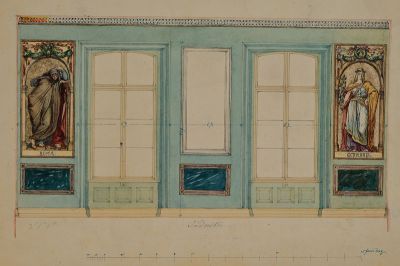
The Mourning Roma (Left) and the
Triumphant Germania (Right)
Four motifs: Roma, Germania, Odoacer, and Theodoric, each titled and dated 4 June 1867.
Then on the west wall the curly blonde Eastgoth Alarich and the Vandal Geiserich follow, the first in stoic demeanor, the other in violent motion. Alaric has a wolfskin thrown over his shoulders as a mantel, leather hugs his body tightly, and over it his armor. His head, which bears the royal crown, tops a wonderfully powerful figure that leans on his halberd, which appears to have grown out of the ground. Quite different is Geiserich, whose raw Vandal-nature is expressed in the broad structure of his body and his impetuous, passionate mood. His right foot rests on a broken column. In his right hand, he holds a mace raised menacingly, with a wild excitement in his eyes, his whole being breathes obstinacy. His is the barbarianism that resorts to brute force. He wears a long garment with oriental ornamentation, the cloak thrown over it flutters behind him, his head is covered by the Phrygian cap, over it is the crown of Jugurtha —the barbarian on the throne.
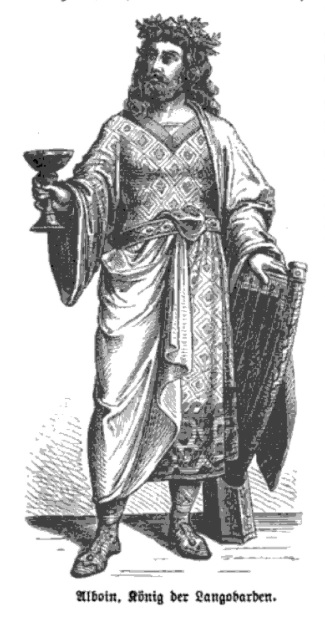
The north wall is occupied by the Franconian Clovis [Chlodwig, Chlodvig] and the Longobard Alboin, along with the Germania, perhaps the best and most characteristic figures of the entire cycle. The seriousness that the figure Clovis exudes is enhanced by the dark, heavy color in which it is painted. On his troubled forehead one can read his many internal struggles. A luminous figure, on the other hand, is that of the Lombard king, Alboin, who stands in youthful beauty and strength, with a holly wreath wrapped around his head, holding a lyre with his left hand, while his right holds up the fateful cup. At first glance one recognizes the multiple relationships which the artist has expressed, since Rosamunde inadvertantly comes to mind.
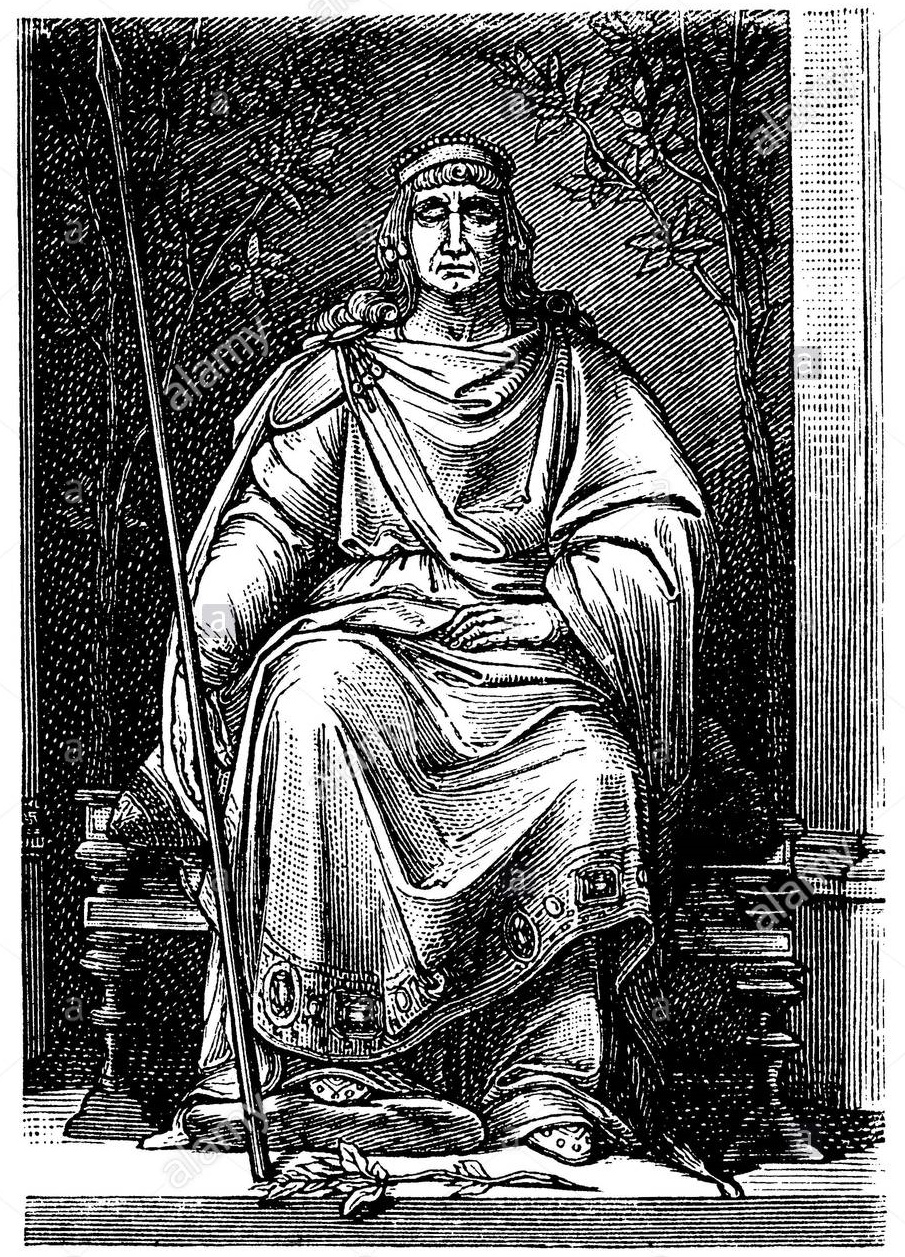
The final figures of Odoacer, Prince of the Herules, and Theodoric the Great adorn the east wall. Calmness, prudence, and awareness of his goals and objectives characterize the German prince, who delivered the fatal blow to the long withered Roman power, and initiated German world domination for hundreds of years. In Theodorich, the legislature appears to be understood by the scroll he holds with its motto: "Qui amat justitiam amat me" ("Who loves me, loves justice"). The individual images are on a gold background with decorations corresponding to the time, executed within Roman arches over which garlands of flowers and fruits are hung.
In his preoccupation with history painting, Naue seems to have come into contact with numismatics. According to him, his name was "mentioned in numismatic circles ... with recognition." In an article published in der Berliner Zeitschrift für Numismatik, Vol. VIII, Naue concluded: "The portrait of King Lysimachus of Thrace on Greek coins, it can be demonstrated that on the coins before 306 BC, the head is not that of Lysimachus, but Alexander the Great." He pioneered research into the pre-Roman antiquities of Bavaria. From 1881 to 1886 he examined no less than 460 burial mounds and 40 row graves "in a strictly systematic manner" starting at the Ammersee and "from there going step-by-step to the south to the Rieg- und Staffel-See at the foot of the high mountains." As an archaeologist, Naue made a presentation on prehistoric swords (Die prähistorischen Schwerter), specifically Bronze Age swords, for the Anthropological Society in Munich in 1884. The "Naue" type of Bronze Age sword is named for him. Self-taught, Naue published various smaller treatises for which he proceeded to compile in a dissertation at Tübingen University in 1887, Die Hügelgräber zwischen Ammer- und Staffelsee, for which he earned a doctorate. According to Mark Schmidt (2006), the doctoral application submitted by Naue, as well as the written reports by Herzog allow the correction of a small but evidently widespread error. Contrary to previous biographaphers, [Heierli, 1907; Gummel, 1938; Filip, 1966 and Koschik, 1981], Naue did not earn his doctorate in Tübingen on account of his excavation and scholarly publications, particularly the book "The Barrows Between Ammer and Staffelsee", 1887; Naue himself acknowledged that the lack of regular university studies and other preconditions prevented him from applying for a doctorate. However, the positive reaction to his previous achievements in the field of numismatics and prehistoric research, prompted his request to be classified as "reasonably justified". 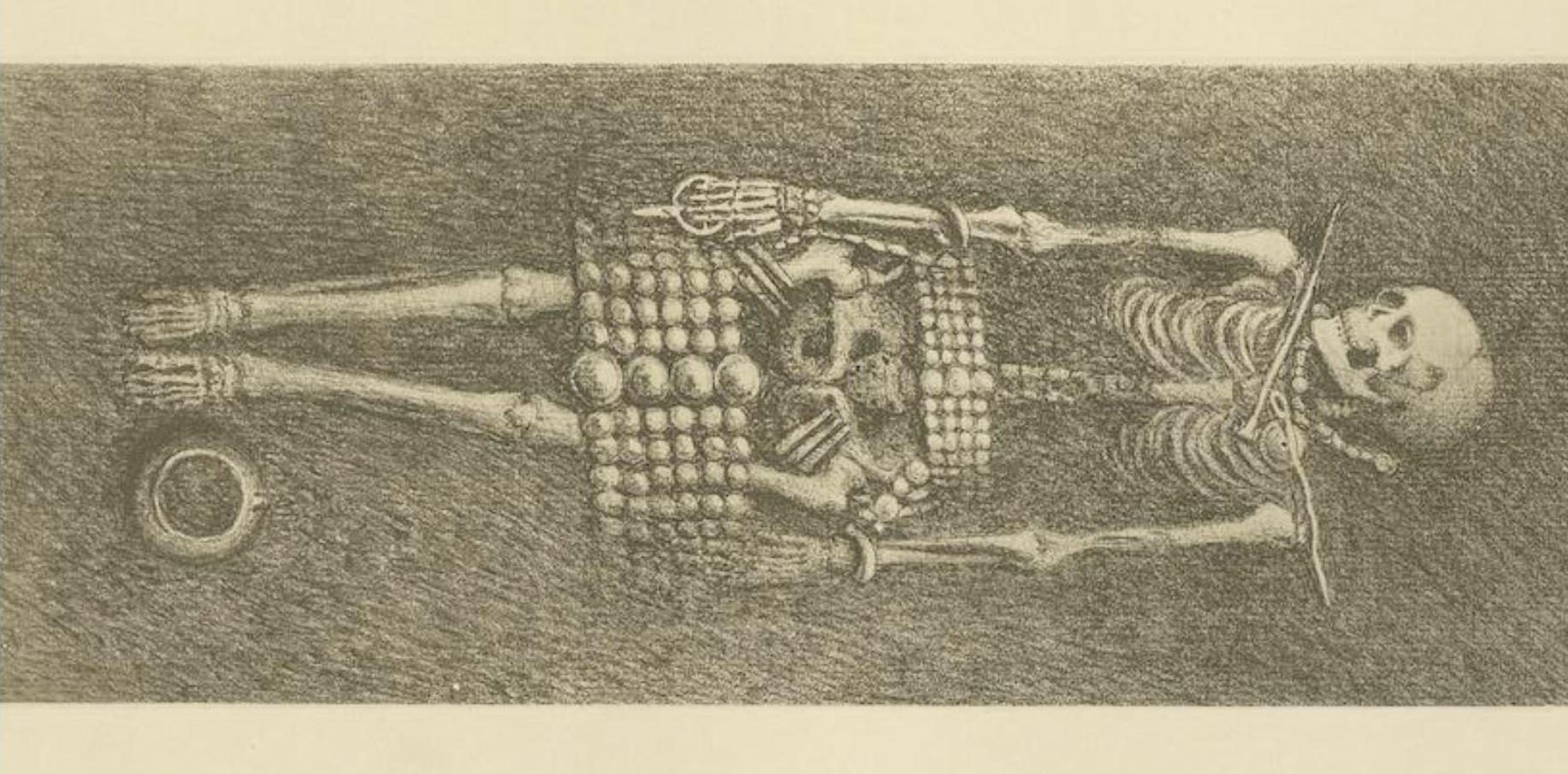 Grave of a Seeress near Munich, drawn by Julius Naue In the field of local Bavarian research, Naue is recognized to have made an outstanding contribution. That Naue knew and mastered "the most important German, French, Italian, English and Scandinavian works relevant to the history of the pre-Roman period" can hardly be doubted. Munich owes its prehistoric Museum to Naue's six-year excavation activities and is recognized as such in the journal of the Bavarian Art Trade Association, 1887, issue 3. On the occasion of the opening of the Prehistoric State Collection in 1889, Naue modestly described his own finds as the foundation of the museum. He also planned a multi-volume work on "The Bronze Age in Upper Bavaria" (Die Bronzezeit in Oberbayernn), but only published the first volume in 1894. 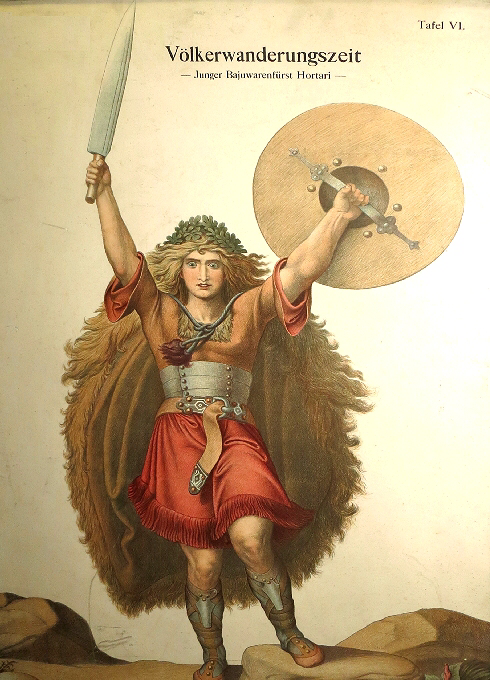 Hortari dem Jungenn Julius Naue
|
|||||||||||||||||||||||||||||||||||||||||||||
|
|||||||||||||||||||||||||||||||||||||||||||||
|
|
|||||||||||||||||||||||||||||||||||||||||||||
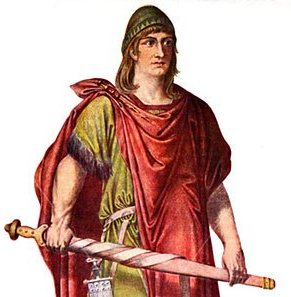
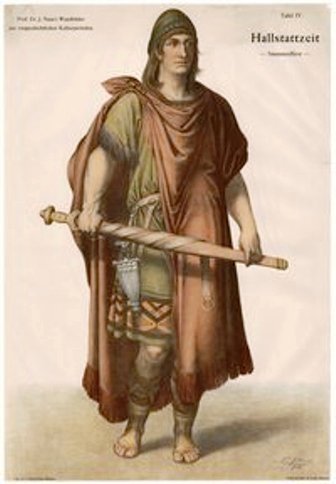
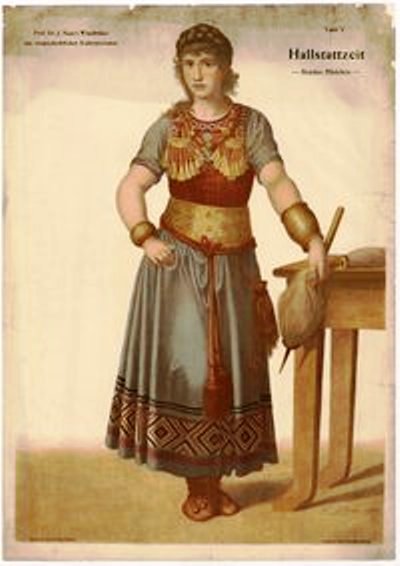
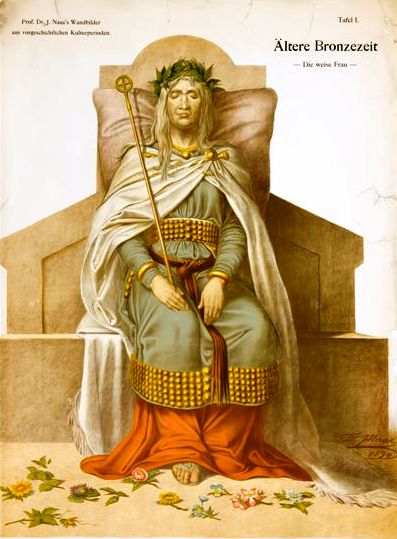
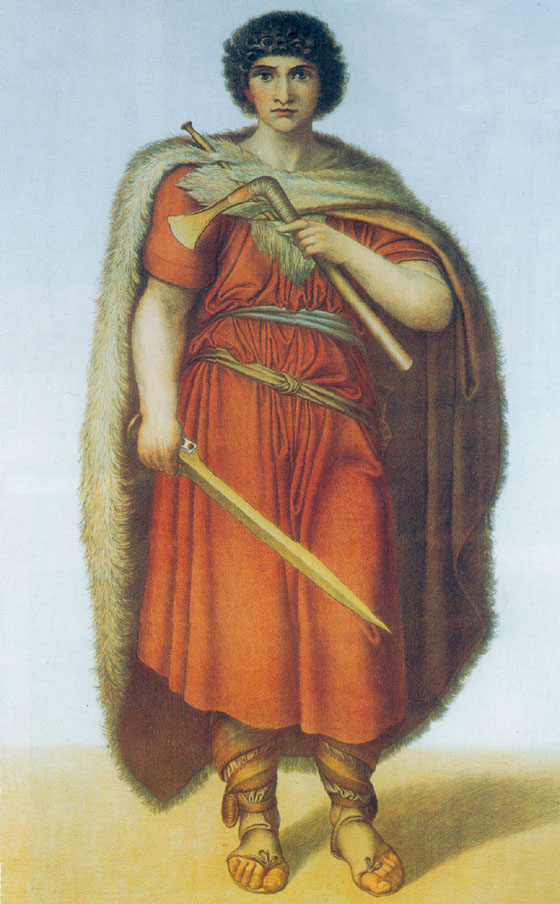
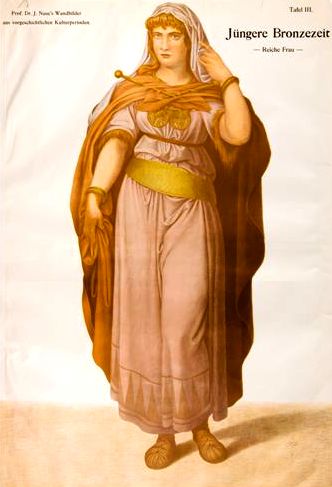
| A Reconstruction of Historic Costume: The Germans (1894) | |||||||||||||||||||||||||||||||||||||||||||||
 |
 |
|
|||||||||||||||||||||||||||||||||||||||||||
|
Hallstatt Period: Tribal Prince |
Hallstatt Period: The Rich Girl |
The Migration Period: Young Bavarian Prince Hortari |
|||||||||||||||||||||||||||||||||||||||||||
|
1879 Julius Naue THE LOST MASTERPIECE HELGI UND SIGRUN |
|||||||||||||||||||||||||||||||||||||||||||||
| —Seven Tempera Pictures
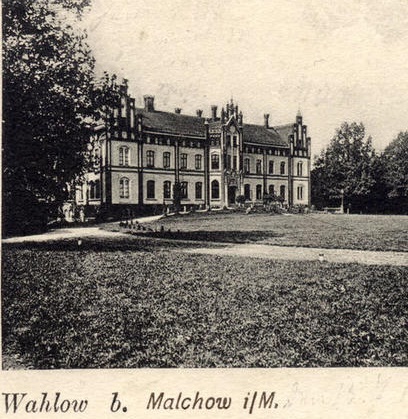
from the Eddic Legend— in the von Flotow mansion, Walow by Malchow, in Mecklenburg-Schwerin. |
|||||||||||||||||||||||||||||||||||||||||||||
|
In
1879, Naue also executed
seven tempera paintings from the Germanic epic "Helgi and
Sigrun" in von
Flotow's castle in Mecklenburg, including images of
the Nordic gods.
A description of this work from
Hermanowski's artbook can also be found below. |
|||||||||||||||||||||||||||||||||||||||||||||
|
|||||||||||||||||||||||||||||||||||||||||||||
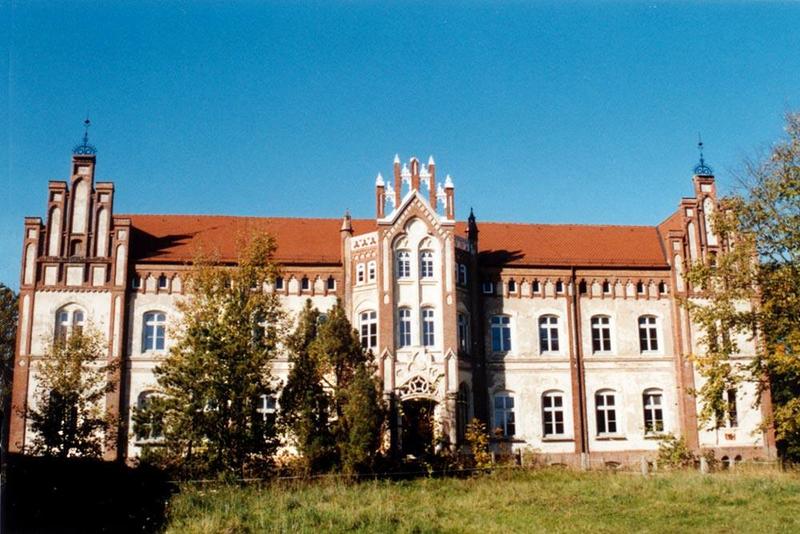
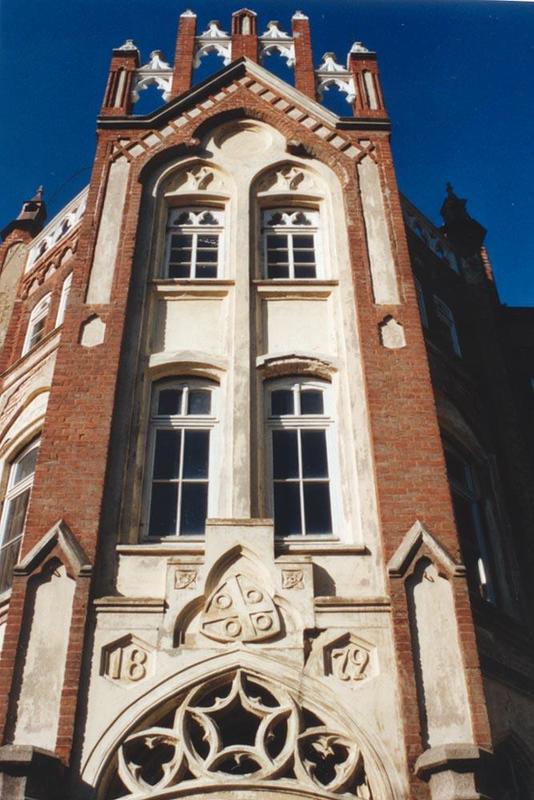
The von Flotow family belongs to the ancient nobility of Mecklenburg. The first of the family to be mentioned in writing is Godefridus de Vlotowein a document dating from 1241. Walow (or Wahlow) was first mentioned in 1255. The village was owned by the von Flotow family from 1384 until they were expelled after World War II. The von Flotows had the prestigious manor built new in 1879, the year inscribed above the crowned entrance. The neo-Gothic style manor at Schlossstraße 9, 17209, Walow, is richly decorated with elaborate brick ornamentation. Naue glorified the song "Helgi and Sigrun" there in 1879 in a series of seven tempura paintings (described below). After some initial renovation work on the manor in 2006, restoration was suspended. The building stood empty for many years until new owners began to renovate the manor house in the autumn of 2017. So, that begs the question, do the murals still exist? If so, what condition are they in? |
|||||||||||||||||||||||||||||||||||||||||||||
 |
|||||||||||||||||||||||||||||||||||||||||||||
|
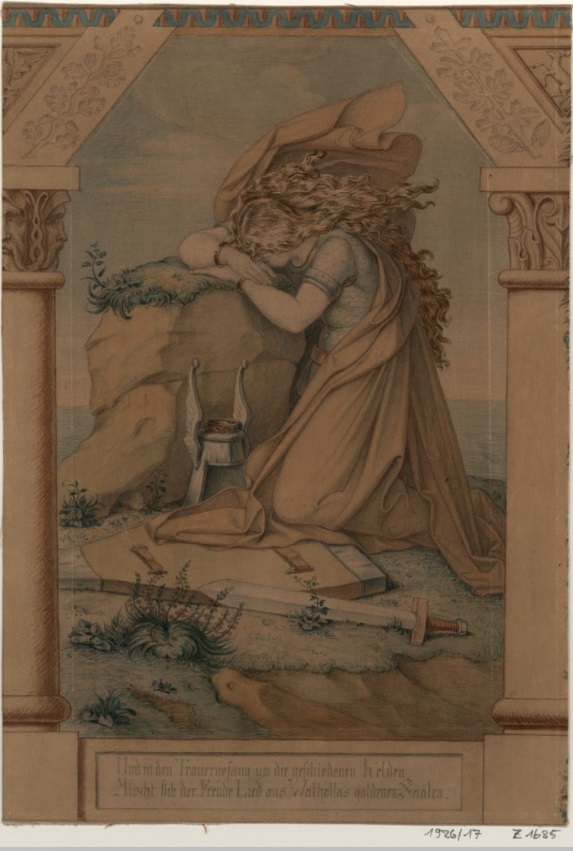
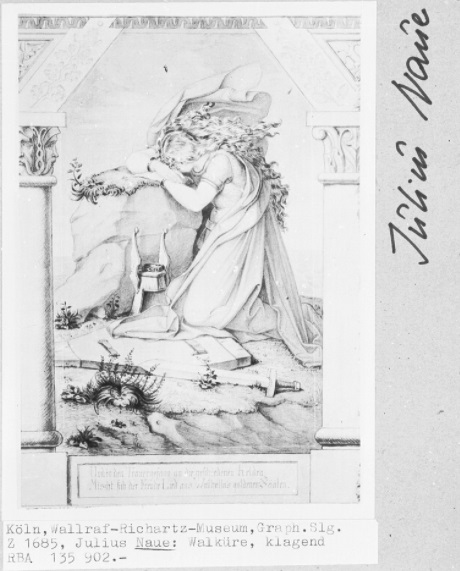
Schloss Wahlow by Malchow Dr. Hermanowski's Description of the Seven Tempura Paintings, 1891: No pictures from this cycle are known. The accompanying art is representative of Naue's work. |
|||||||||||||||||||||||||||||||||||||||||||||
|
The most important gods we find united on one of the seven tempera pictures by which Naue glorified the song of "Helgi and Sigrun" in 1879. "Helgi is brought to the gods by Sigrun" is its signature piece. We see gods and Einherjar gathered in Valhalla, similar to the types in the paintings of Naue's Edda fresco cycle discussed above. In the middle sits the white-haired Odin. He holds the spear Gungnir upright in his left hand, while making a welcoming motion with his right hand toward the arriving Helgi. To Odin's right sits Thor, with red hair and beard, more good-natured than terrible-looking. In his left hand Thor holds his hammer firmly on his left knee, with his right hand he waves to the new guest, who is introduced by the garlanded Sigrun. To the left of Odin sits Frigg. Right behind Thor stands Tyr with a winged helmet and spear in his left hand. Beside him sits Bragi, his head garlanded, his right hand gripping a harp. On the right and on the left of this group of gods, singers are standing or sitting at tables, drinking the sweet mead from horns and waving with them to the newcomer, while a Valkyrie, this time without swan-wings, carries a cup with mead to Helgi.
|
|||||||||||||||||||||||||||||||||||||||||||||
|
|||||||||||||||||||||||||||||||||||||||||||||
|
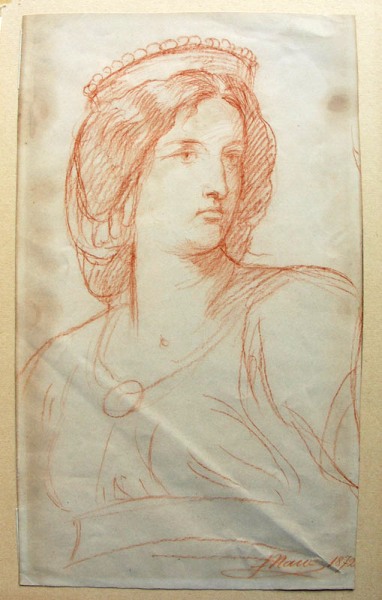
Also known: King Högni, King Hodbroddr, Sigrun. Three Head-studies in Red Pencil for the Tempera-picture cycle 'Helgi and Sigrun' on the Schlosse Wahlow bei Malchow in Mecklenburg-Schwerin. |
|||||||||||||||||||||||||||||||||||||||||||||
|
|
|||||||||||||||||||||||||||||||||||||||||||||
BIBLIOGRAPHY: Führich, Lukas von, and Naue, Julius.Moritz von Schwind eine Lebensskizze; nach Mittheilungen von Angehörigen und Freunden des verstorbenen Meisters, 1871 Die Prähistorischen Schwerter, 1886 Die Figürlichen Darstellungen auf Gürtelblechen und Situlen von Bronze aus der Hallstattperiode, 1886 Die Hügelgräber zwischen Ammer- und Staffelsee : geöffnet, untersucht und beschrieben, Stuttgart: Enke, 1887 Bronze und Eisen in der Vorgeschichte Oberbayerns / In: Zeitschrift des Bayerischen Kunstgewerbe-Vereins zu München, 1887 Eisernes Dolchmesser aus dem Gardasee. Bonn, 1888 Hügelgräber neben und auf Hochäckern, München: Verlag der Redaktion der "Prähistorischen Blätter", 1889 Westgothischer Goldfund aus einem Felsengrabe bei Mykenä. Bonn, 1892 Die Bronzezeit in Oberbayern, 1894 by Dr. Julius Naue, pp. 292. With album of fifty plates. Piloty & Löhle, Munich. Southwest of Munich amid the lovely scenery which surrounds the Ammer and Staffel Lakes a number of sepulchral tumuli were discovered some years ago which on investigation dated to the age of bronze ranging in time from its earlier to its later periods. Fortunately for prehistoric science, they attracted the attention of Dr. Julius Naue of Munich and he set about their thorough and accurate examination. For fifteen years he has personally explored them spade in hand surrounding digging with those numerous precautions the field archæologist should always respect. Before his researches practically nothing known of the conditions of the peoples of bronze age in the region indicated. By opening more than three hundred burial mounds and the sedulous study of their contents, he is able in the handsome volume named above to offer an almost complete restoration of the culture of that remote epoch. In the older graves there are abundant sils weapons and ornaments of bronze bowls jars and plates in earthenware frequently in artistic forms and decorated externally in lines and spirals and a quantity of amber No other metal was exhumed. Only in the later graves very small objects in gold and pearls glass appear but iron and silver continue unvery known. The text presents first the notes of each excavation. Then follow detailed descriptions the weapons exhumed the tools and utensils articles of ornament and pottery. Special studies are appended on the material and technique of the objects their form style and ornamentation and the inferences which they enable the student to draw regarding the people who left these memorials of their presence. The conclusions on the last topic are unexpected. We find ourselves in the presence of an industrious and peaceable community depending on agriculture almost exclusively cultivating the soil diligently and raising herds of cattle. They wore woolen clothing with ornamented leather belts and decorated with bronze plates. They were of good stature the men 1.65 70 the women 1.60 65 They were firm believers in a life after death and surrounded the corpse with such objects as it was supposed to require in its wanderings in spiritland. Women took a high rank in the community as queens and priestesses. Some of the most elaborate of the interments preserved their remains only. The culture was a progressive one be traced from the neolithic time through the whole of the bronze age down to the epoch when the Roman forays destroyed it. Slowly but steadily it had increased and for centuries a state of comparative peace must have prevailed to permit this uninterrupted growth. The numerous illustrations in the text and the admirable album of fifty full page plates present in the most satisfactory manner the results of these important and suggestive excavations —D.G. BRINTON, 1896.Die Frauengestalten auf der Bronzesitula von Welzelach und deren Kopfschmuck / München: Verlag der Redaktion der "Prähistorischen Blätter", 1895 Bronzehelm mit eingepunzten Figuren und Ornamenten aus Nord-Italien. Prähistorischen Blätter, München, 1901 . Die Vorrömischen Schwerter aus Kupfer, Bronze und Eisen. Mit einem Album . München, 1903 Drei neuere Bronzeschwertfunde aus Bayern und dem benachbarten Österreich, Prähistorischen Blätter, München, 1904 At the age of 71, the artist and archaeologist Julius Naue died on 14 March 1907 in Munich. His grave lies in Alter Südlicher Friedhof. A posthumous auction of his collections was held in Münich at the Galerie Helbing—München, Helbing, on Tuesday 19 May 1908. "The Collection of Prof. Dr. Julius Naue, Munich. Ceramics, Terracotta figures, Marble sculptures, Bronze and Precious metalworks from Prehistoric times and Classical Antiquity, including the late Roman and Migration periods." Sammlung Professor Dr. Jul. Naue, München:Keramik, figürliche Terrakotten, Marmorbildwerke, Bronze- und Edel- metallarbeiten der vorgeschichtlichen Zeit und des klassischen Altertums inkl. spätrömischer und Völkerwanderungszeit. |
|||||||||||||||||||||||||||||||||||||||||||||
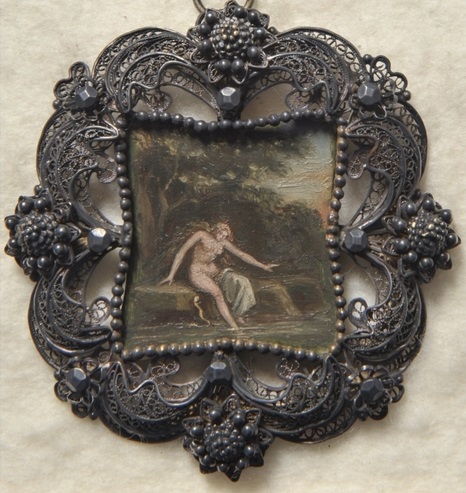 Waldsee (Forest Lake)
|
|||||||||||||||||||||||||||||||||||||||||||||
|
If anyone knows of any pictorical remains of any of these monumental artworks, please contact me. |
|||||||||||||||||||||||||||||||||||||||||||||
[HOME][POPULAR RETELLINGS]